
IAMPETH 2026 - Listening to Gold - Martha Laurens

ALL SKILL LEVELS | GILDING Gold can be sensitive, surprising, and quietly expressive. Listening to Gold is a relaxed, beginner-friendly introduction to gilding that invites participants to slow down a…
Read MoreDescription
ALL SKILL LEVELS | GILDING
Gold can be sensitive, surprising, and quietly expressive. Listening to Gold is a relaxed, beginner-friendly introduction to gilding that invites participants to slow down and observe how gold behaves in practice. In this class, students will explore gold using accessible metallic paints and ready-made gold sizes, with shell gold offered as an optional material for those who wish to experience it. Through simple studies designed to welcome imperfection, we’ll observe how gold responds to colours. Demonstrations will include both shell gold and gold paint, along with an introduction to common gilding sizes, allowing participants to see how different materials and surfaces interact. Along the way, we’ll gently explore common gilding challenges (such as streaking, dullness, pooling, uneven edges and coverage) and how to recognize and respond to them with confidence. Rather than focusing on finished decorative pieces, this class encourages curiosity, experimentation, and creative awareness. By the end of the session, participants will have a clearer understanding of how gold works, how to troubleshoot common issues, and how to approach gilding with greater ease and enjoyment. No prior gilding experience is required.
CLASS SUPPLIES
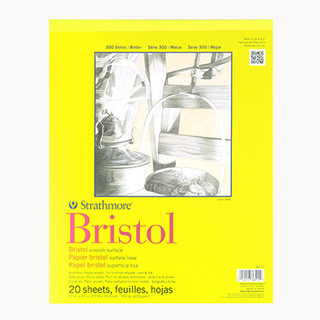
- For artwork surfaces, use Bristol or hot press watercolor paper (minimum 300gsm/140lb), preparing two 5×5-inch pieces and one 4×6-inch piece; suitable options include Strathmore Bristol, Fabriano Artistico, Arches, or Saunders Waterford (smooth)
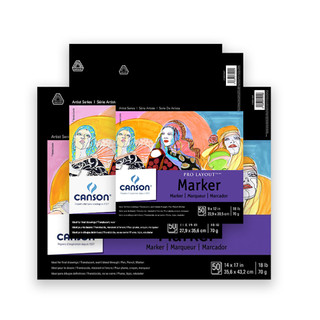
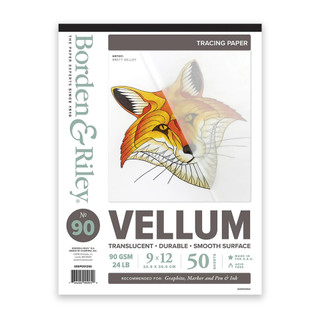
- You will also need tracing or transparent paper (Canson, Daler-Rowney, or equivalent to Borden & Riley #90 Vellum Sheer Trace) and glassine paper
- Use gouache (M. Graham or Winsor & Newton Designers’ Gouache) in Payne’s Grey, Raw Umber, Burnt Umber, Ultramarine Blue, Naples Yellow, and Titanium or Permanent White; Finetec or Coliro Pearl Colors (Finetec GmbH) in gold and silver ranges (especially Pearl Gold and Champagne Gold) may substitute for shell gold
- Use mineral or distilled water as a binder
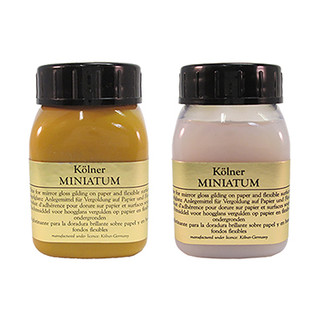
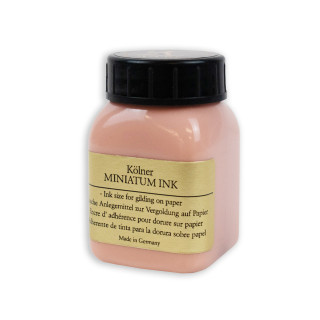
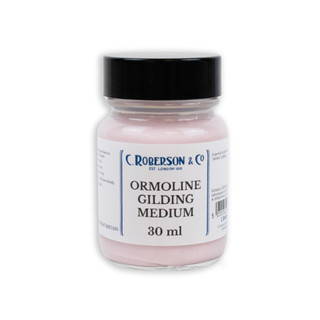
- Gilding materials include Miniatum Kölner, Miniatum Ink Kölner, Instacoll (Yellow Base) Kölner, Improved Gold Body by C. Roberson & Co., and X-Press It Gold Size or Elmer’s Glue
- Use a book of five loose 23.5k–24k gold leaves (Noris Blattgold, Giusto Manetti Battiloro, or Kölner), with colors such as 22ct moon gold and 24ct pure gold (fewer than three leaves needed per person)
- Tools include a hard pencil (5H–8H)
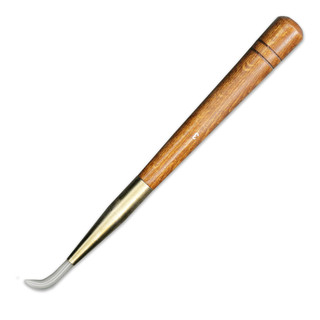
- agate burnishers (dog’s tooth or round tip and pencil tooth) View full options for burnishers here
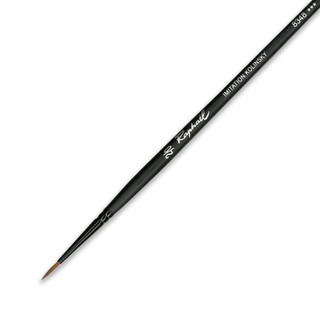
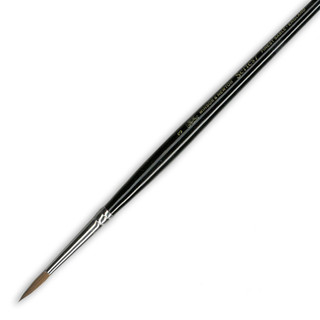
- Kolinsky brushes (sizes 000, 0, 1, 2, or 4; e.g., Winsor & Newton Series 7, Isabey 6229, Raphael), a size 000 synthetic brush (e.g., Robert A. Wade NEEF 970 Taklon Round)
- a mixing brush
- paper towels
- a watercolor palette
- a stylus or metal-tip tracing stylus
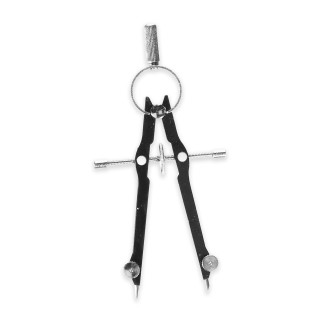
- a compass
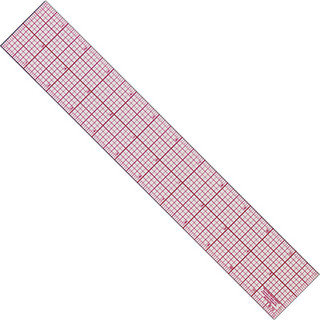
- a graph ruler
- a Rotring Isograph pen (.10, .20, or .25)
- aluminum foil or cling wrap
OPTIONAL
- Use watercolor such as Schmincke Horadam or Daniel Smith for transparent layering and glazing effects.
- For raised work, use traditional gesso (handmade or Harvest’s Gesso) along with gum ammoniac.
- Use handmade shell gold or Japanese shell gold by Cornelissen and Son, and keep it in a dark jar if using shell gold.
- For gilding, use patent (transfer) leaf from Noris Blattgold or Manetti for easier handling, with additional gold options including 23ct yellow gold, 22ct yellow gold, and 18ct lemon gold.
-
-
On Sale
-
On Sale

-
On Sale

-
On Sale
-
On Sale
-

-
On Sale

-
On Sale

-
On Sale

-
On Sale
-
-

-

-
On Sale

-
On Sale
-
-
On Sale
-

-

-
-
-

-
-
On Sale

Related Products
Related Products

IAMPETH 2026 Pre-Order

IAMPETH 2026 - Ornamental Penmanship - Mike Ward
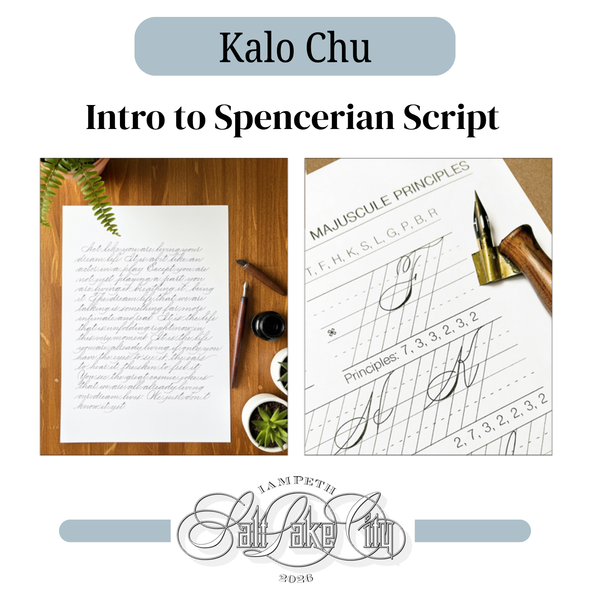
IAMPETH 2026 - Intro to Spencerian - Kalo Chu

IAMPETH 2026 -To Flourish is to Fly - Colby Cline
